
If you are sourcing footwear from China, two abbreviations appear in almost every factory profile and quotation: OEM and ODM. Buyers often treat them as synonyms, but they describe fundamentally different relationships. The model you choose decides who owns the design, how much tooling you pay for, how fast you can launch, how low the minimum order can be, and how easily a competitor can copy your product. This article defines both models, compares them on the factors that matter, and explains where private label fits in.
What OEM Shoe Manufacturing Means
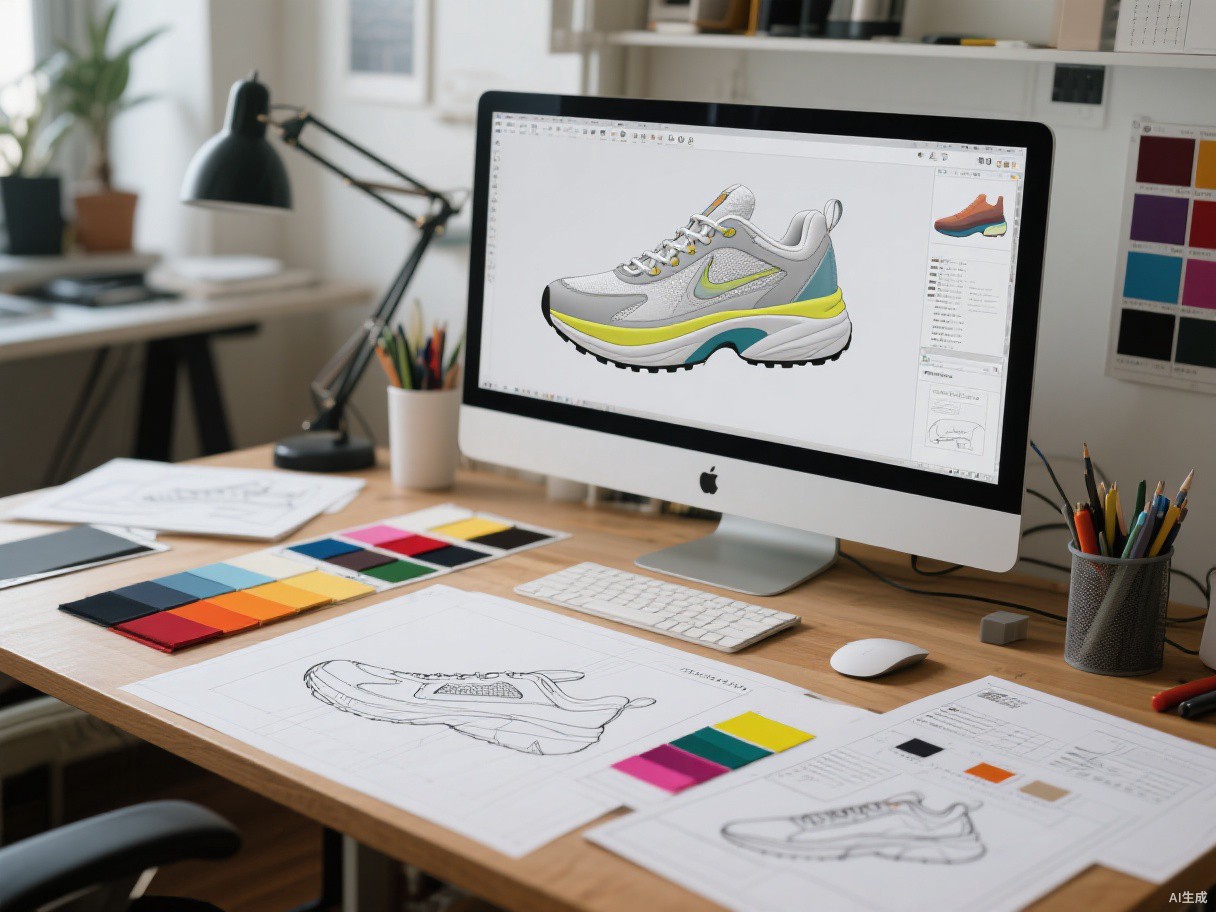
OEM stands for Original Equipment Manufacturer. In the footwear industry, an OEM shoe manufacturer in China produces shoes entirely to the buyer's own designs and specifications. You supply the tech pack, CAD files, material callouts, colorways, outsole drawings or a physical reference sample; the factory engineers the patterns, develops or sources lasts and molds, sources the specified materials and builds your exact product.
Under OEM, you are the product owner. The factory is a production partner, not a design source. It must not reuse your exclusive upper patterns, custom molds or colorways for other customers. OEM is how most branded sportswear companies, designer labels and fast-growing direct-to-consumer brands work: the brand controls product identity, and the manufacturer contributes engineering, capacity and craftsmanship.
What ODM Shoe Manufacturing Means
ODM stands for Original Design Manufacturer. An ODM shoe factory in China designs and develops shoes on its own account — creating the last, the outsole, the upper pattern and the sample — and then offers those ready designs to buyers, who select models from a catalog and customize colors, materials, logos and packaging. ODM is sometimes described as buying a factory-developed model "off the shelf."
The advantage is speed and low entry cost. There is no mold to develop, no pattern engineering to pay for, and samples can ship within days. The trade-off is exclusivity: unless you negotiate it, the same base model may be offered to other buyers, sometimes in your own market. ODM is ideal for wholesalers, promotional buyers, retail chains and new brands that want to test demand before investing in proprietary development.
OEM vs ODM: Side-by-Side Comparison
| Factor | OEM (your design) | ODM (factory design) |
|---|---|---|
| Intellectual property | Design, lasts and custom molds belong to you; factory signs confidentiality and non-use terms | Base design and tooling belong to the factory; you typically own only your branding and custom colorway |
| Typical MOQ | Usually 300 pairs per style minimum; 1,000+ pairs for best pricing because materials and line setup are bespoke | Often lower, sometimes 300 pairs total, because existing tooling and bulk material stock are reused across buyers |
| Development cycle | 7-15 days per sample round; new molds 12-20 days; multiple revision rounds normal | Samples in 5-10 days from an existing model; little or no tooling time |
| Cost structure | Sample fees and mold costs upfront; best unit price at scale and full design differentiation | Minimal development cost and lower entry price, but less leverage at large volume and no unique product |
| Ideal customer | Established brands, licensed properties and sellers building a defensible signature line | Startups, wholesalers, promotional orders and retailers needing fast, proven models |
Intellectual Property: Who Owns Lasts, Molds and Patterns?
Intellectual property is where OEM and ODM differ most sharply, and it deserves a written clause in every contract. In a genuine OEM project, you pay for or jointly fund the custom last, outsole mold and pattern development, and the agreement should state that the tooling is your property, held in bailment by the factory, and cannot be used, copied or shown to third parties. Reputable factories mark custom molds with your brand code and store them separately.
In ODM, the factory retains the base design because it absorbed the development cost and risk. What you can negotiate is a degree of exclusivity — for example, exclusive use of a given colorway or material combination, a modified upper pattern, or a period during which the model will not be sold to buyers in your country. If full exclusivity matters to you, expect to pay a tooling buyout or commit to a higher volume.
How Private Label Relates to OEM and ODM
Private label is not a third manufacturing model; it is a branding layer that can sit on top of either one. Private label simply means the shoe carries your brand — woven label, printed logo, hang tags, branded box and packaging — instead of the factory's name or no name at all. A private label order can be built on an ODM base model, which is how most startup labels launch, or on a fully bespoke OEM design, which is how mature labels protect their signature products.
This is why you will see factories advertise "OEM/ODM and private label" together. The useful question is never only "do you do private label?" but "is the base shoe my exclusive OEM design or one of your ODM models, and who else can buy it?"
Which Model Fits Your Business?
Start with three questions. First, how important is product uniqueness? If your strategy competes on a signature silhouette, patented construction or distinctive look, OEM is the only route that gives you control. If you compete on price, speed and reliable basics, ODM gets you to market fastest. Second, what is your budget for development? OEM requires sample fees, mold fees and patience for revisions; ODM spreads those costs across many buyers.
Third, how confident are you in demand? Brands with proven retail pull can justify OEM tooling from day one; brands still validating a category should use ODM or a hybrid approach — an existing sole unit with a custom upper — to test the market before commissioning proprietary molds. Many successful brands begin ODM, build sales data, and migrate their best sellers into OEM exclusives in season two or three.
Migrating from ODM to OEM as Your Brand Grows
The transition between models is a growth path, not a one-time choice. A common sequence is: launch with two or three factory ODM models under your private label; reorder the winners; then ask the factory to develop a modified upper, custom colors and exclusive packaging while keeping the proven sole; once volume supports it, invest in your own outsole mold and last, converting the hero product into a true OEM line.
Because tooling ownership carries over, pick a factory capable of both from the beginning. A pure ODM trading shop may not have the engineering team to support bespoke development later, while a full-service China shoe factory with in-house last and mold making can walk the same product from catalog sample to exclusive best seller without you changing partners.
Questions to Ask Before Signing
- Is this model your existing ODM design or will it be developed exclusively for me, and who owns the molds?
- What are the sample fees, mold fees and refund or deduction terms when the bulk order is placed?
- What MOQ applies per style and per colorway, and how do reorder minimums change?
- Can you provide a written non-use and confidentiality agreement for my tech pack and tooling?
- Which markets or buyers, if any, already sell the same base model, and can exclusivity be negotiated for my country?
Clear answers to these five questions remove nearly every dispute that arises between footwear brands and Chinese manufacturers. OEM rewards brands that want ownership and differentiation; ODM rewards speed and capital efficiency — and many brands use both at the same time for different tiers of their line.
OEM, ODM or a Hybrid — Tell Us Your Plan
Our factory supports ready ODM models with low MOQ and fully bespoke OEM development with in-house last and mold making. Send your brief for a recommendation and quotation.
Get a Quote