
Finding a reliable China shoe factory is the single most important decision a footwear brand can make. A good manufacturer protects your margins, your delivery schedule and your reputation with retailers; a weak one can turn a best-selling design into a container of glued-split, off-size shoes that nobody will accept. The problem is that an online showroom tells you almost nothing. Glossy photos and fast quotes are easy to produce; consistent quality, legal accountability and export competence are not. This guide walks through eight verification checkpoints we recommend every buyer complete before paying a deposit to any OEM shoe manufacturer in China.
1. Verify the Business License and Legal Entity
Every legitimate factory in China holds a Unified Social Credit Code business license (营业执照). Ask for a clear copy and check four things: the registered company name matches the bank account you will pay, the registered scope includes footwear manufacturing, the registered capital is reasonable for a production plant, and the company is in normal status rather than revoked or listed for abnormalities. You can verify the code through the official National Enterprise Credit Information Publicity System or a Chinese business registry service.
Be cautious when the trading name on the website, the license name and the bank account beneficiary do not match. Trading companies are common in the footwear industry and are not inherently bad, but you should know whether you are contracting with the actual factory or an intermediary, because it affects price, communication speed and responsibility when defects appear.
2. Complete an On-Site or Live Video Factory Audit
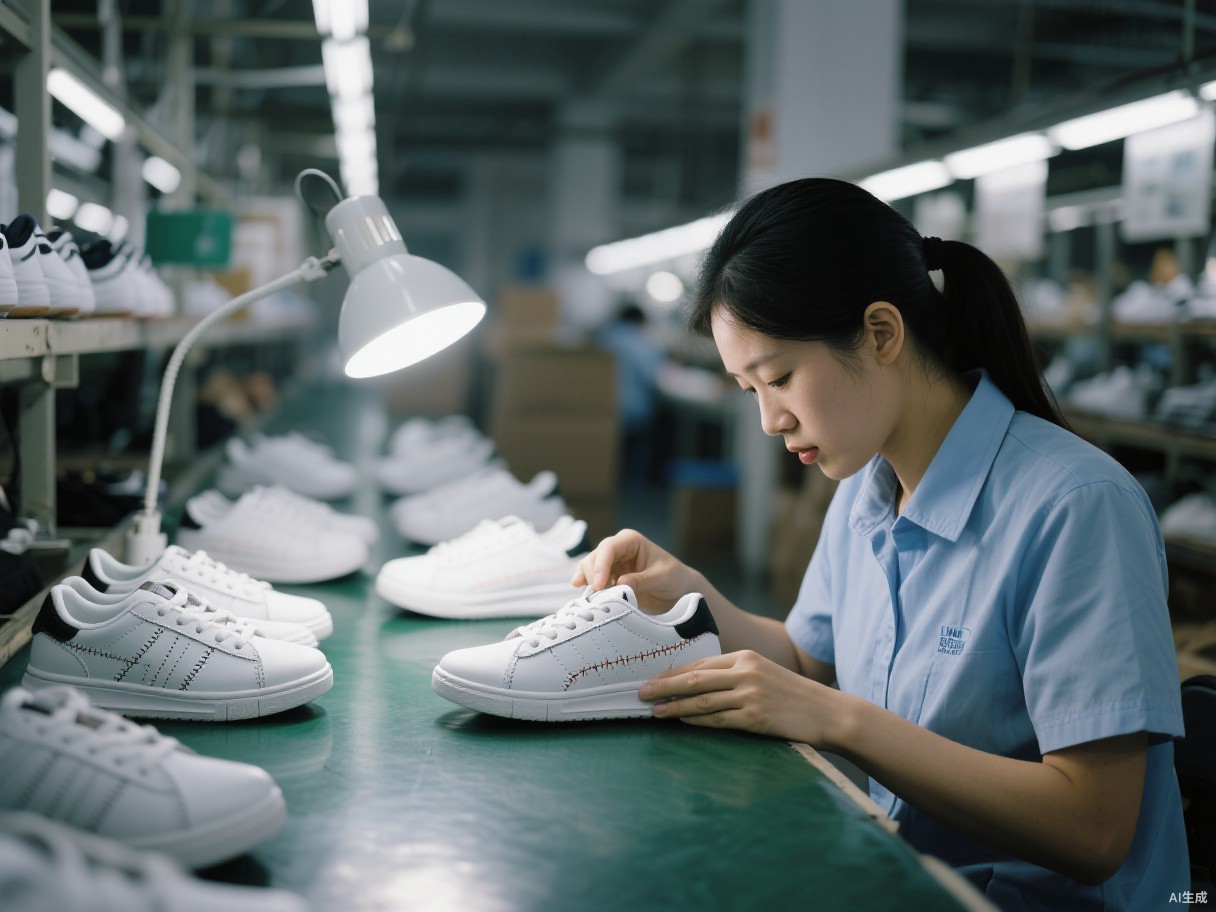
Nothing replaces standing on the production floor, but not every buyer can fly to Dongguan, Jinjiang or Wenzhou. A live, unscripted video tour is the next best option. Ask the supplier to connect you on a video call at a pre-agreed time and walk through the entire facility in one continuous shot: cutting, stitching, lasting, sole pressing, finishing, QC and the warehouse. Request that the camera shows the factory entrance signboard, the production schedule board with current orders and workers actively producing shoes similar to yours.
Watch for red flags: an empty or suspiciously tidy workshop during working hours, refusal to show certain zones, a pre-recorded video instead of a live call, or an address that turns out to be a shared office. For larger orders, a third-party audit firm such as SGS, Bureau Veritas or TUV can deliver a formal supplier audit covering facilities, workforce and management systems.

3. Evaluate Production Lines and Equipment
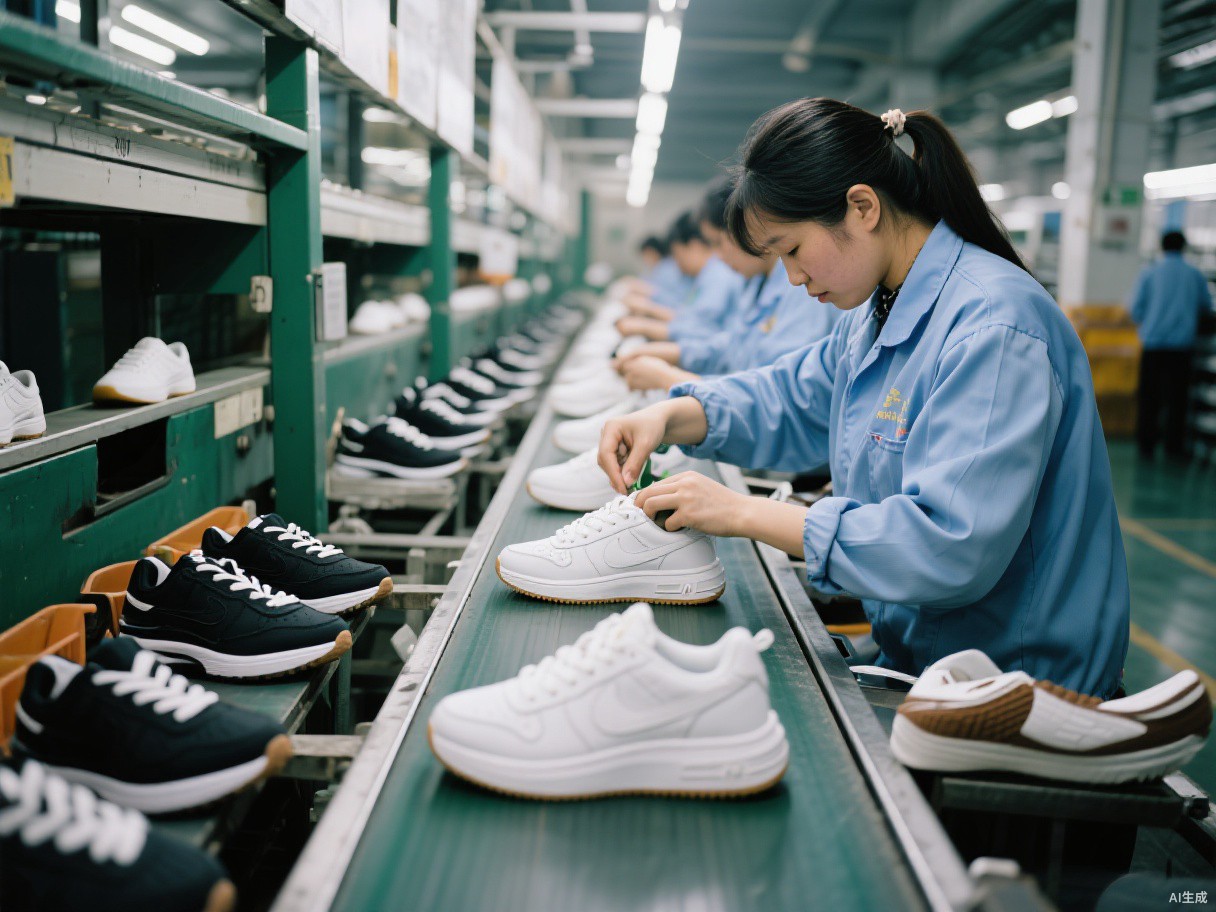
A factory's lines and tooling reveal what it can genuinely do well. Ask how many lasting or assembly lines it operates, how many workers are on the floor, monthly capacity in pairs, and which construction methods it handles — cemented, vulcanized, injection, strobel or Goodyear-welted. A capable plant should also show its last and mold workshop, stitching department, sole preparation area and finishing line rather than outsourcing everything to neighboring workshops.
Check equipment condition and housekeeping. Computerized cutting machines, CNC mold equipment, hydraulic sole presses and temperature-controlled curing ovens indicate a factory that can hold tolerances; piles of broken machinery, uncontrolled glue stations and chaotic material storage usually predict inconsistent bonding and dirty uppers. Always confirm the factory currently produces your exact category — sneakers, leather shoes, boots, safety shoes or kids shoes — because footwear expertise does not transfer freely between categories.
4. Audit the Quality Control System and AQL Standards
Reliable manufacturers run quality control at four stages: incoming material inspection, inline process checks, finishing inspection and a final random inspection. Ask which AQL standard they apply. The common industry benchmark for footwear is AQL 2.5 for major defects and 4.0 for minor defects under ISO 2859-1 sampling. Request a copy of their inspection checklist — it should cover upper stitching, cement bond strength, symmetry, sizing, color consistency, sole attachment and packaging.
Ask whether they can support independent third-party final random inspections and whether you can reserve the right to reject a shipment that fails. Factories that resist inspection, have no dedicated QC team, or cannot produce a single inspection report from a previous order are risky partners regardless of how low their quote is.
5. Confirm Export Experience and Market Compliance
A factory that has only sold domestically will struggle with export documentation, material declarations and destination-market rules. Ask which countries it ships to, whether it has exported to your market before, and whether it can provide commercial invoices, packing lists, certificates of origin and Form A or FTA documents where applicable. Experience with 60+ countries, for example, means the team has handled US customs, EU importers and Middle East labeling requirements.
Compliance depends on the product and market: safety shoes may need ASTM F2413 or CE certification; kids shoes sold in the US fall under CPSIA with CPC children's product certificates and lead and phthalate testing; EU buyers often expect REACH compliance. Social audits such as BSCI, ISO 9001 and SEDEX are increasingly requested by retailers. Ask for verifiable certificates — not photo-shopped scans — and confirm the certificate holder is the factory entity itself.
6. Test Communication and English Project Management
Most footwear import failures are not technical; they are communication failures. A reliable China shoe factory assigns you a sales contact or project manager who reads technical English, understands a bill of materials, confirms decisions in writing and responds within roughly one working day. During the inquiry stage, test this deliberately: send a tech pack and see whether the quote comes back line by line or as a single unexplained number.
Notice how the factory handles questions it cannot answer. A professional supplier says when something needs engineering confirmation and returns with a real answer; an unreliable one agrees to everything and surprises you at sample stage. Time-zone overlap, WhatsApp or email discipline, and clear records of every approved material and colorway are what keep bulk production matching the approved sample.
7. Review the Sampling Policy Before Committing
Sampling is where trust is built or destroyed. A credible OEM shoe manufacturer China will quote sample fees honestly — typically USD 50-150 per pair depending on tooling — deliver samples in 7-15 days, and state whether the fee is refundable or deductible against the bulk order. Samples should be made from the actual materials specified, in your correct size run, and shipped with a sample card listing materials, colors and Pantone references.
Evaluate fit, workmanship, weight, smell and packaging yourself, and ideally wear-test the pair. Expect two or three revision rounds on a new development; factories that refuse reasonable revisions or whose second sample ignores your first-round comments are showing you how the bulk order will go. Never approve bulk based on photos of the sample alone — have the physical pair in hand.
8. Protect Payments and Sign a Proper Contract
Standard footwear trade terms are a 30% deposit and 70% balance against a copy of the bill of lading, sometimes 30/70 against inspection for first orders. Pay the factory's corporate bank account — never a personal account — and consider LC at sight for very large first orders. Avoid suppliers who pressure for full payment upfront or offer steep discounts for bypassing normal terms, both classic warning signs.
Your sales contract or pro forma invoice should specify the exact product specification, materials, sizes and size ratios, colors, quantities, unit price, Incoterms, delivery date, packaging and carton marks, tolerance and defect policy, inspection rights, IP and confidentiality clauses, and the penalty or discount structure for late delivery. Clarify who owns custom lasts and molds, and prohibit the factory from reusing your exclusive designs for other buyers.
From Shortlist to Purchase Order: A Practical Sequence
Rather than auditing dozens of plants, shortlist three to five factories that already make your category, request itemized quotations from all of them, and run the license and communication checks in parallel. Order samples from the two strongest candidates, compare workmanship against price, and place a video or third-party audit before the first bulk order. Start with a low MOQ trial order of around 300 pairs, inspect before the balance payment, and only scale up once the factory has delivered one flawless shipment.
A reliable China shoe factory will welcome this process rather than resist it. Transparent plants expect professional buyers to verify documents, inspect goods and protect payments, and they have the certificates, systems and export records to make every checkpoint easy. If a supplier pushes you to skip these steps, that alone is the most informative audit result of all.
Verified Factory, Ready for Your Audit
FootwearShoes has produced OEM and private label footwear since 2008 — 12,000㎡ plant, 8 lines, BSCI/ISO 9001/SEDEX audits, MOQ from 300 pairs. Request our license, certificates and a live factory video tour.
Get a Quote